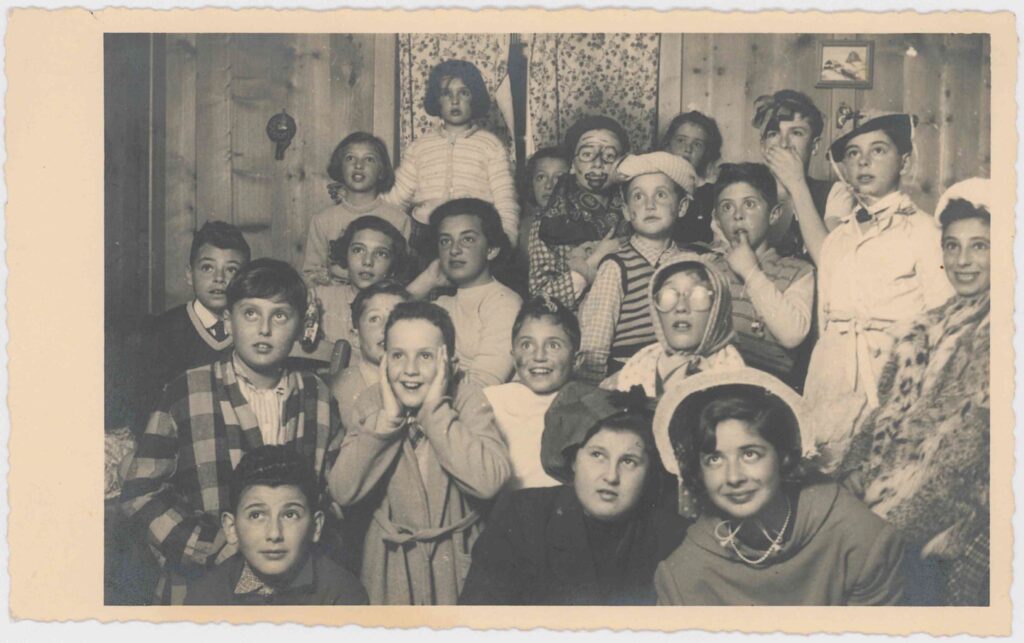
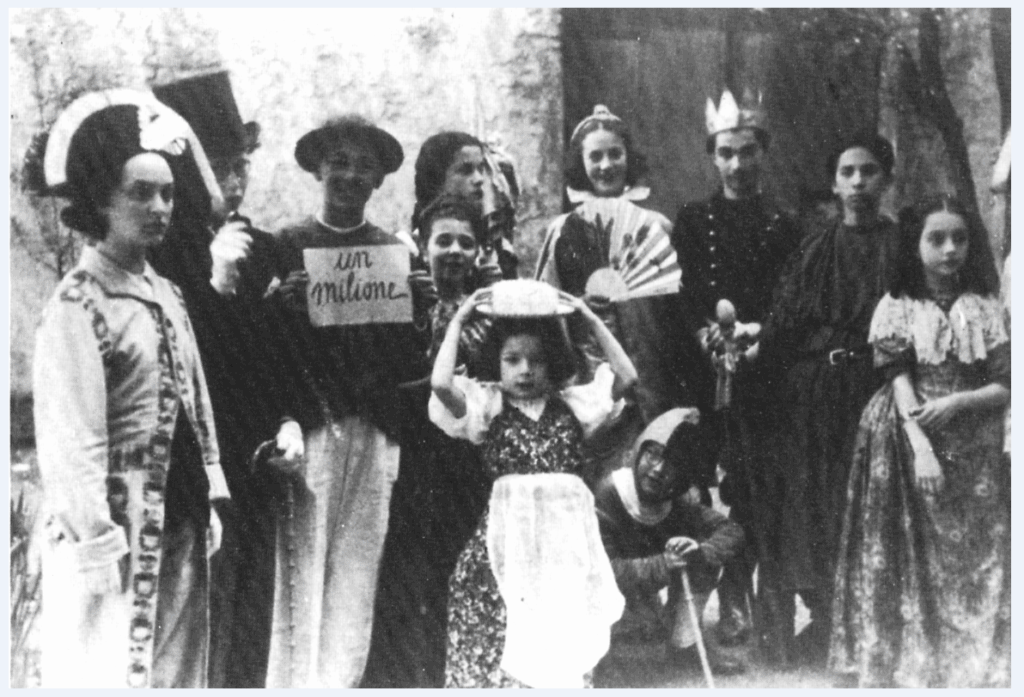
The tradition of wearing costumes and masks at Purim symbolises concealment and transformation, the two main themes of the festival. Queen Esther concealed her identity, and the name of the Lord is never mentioned, thus representing hidden providence. The tradition was first introduced in the Middle Ages probably due to the influence of Carnival and it has acquired a deeply Jewish meaning: concealing, revealing, inverting and transforming. The masks celebrate the reversal of fate and divine protection, making Purim a unique day of joyous reflection and happiness.
Tables and food are central to the story of Purim that starts with Queen Vashti’s refusal to join the banquet organised by her husband, King Ahasuerus. A banquet was the opportunity for Esther to reveal her true identity. The food offered for the festivity symbolises abundance and sharing, the essence of the two relevant mitzvot, that is precepts: a feast and mishloach manot, that is sending portions of food to friends and relatives. Purim recipes are rich and varied, celebrating the notion of filling, recalling concealed and revealed identities, as happens in the Megillah. Hamantaschen, Haman’s pockets, are triangular shaped Ashkenazi pastries that in Italy are known as Haman’s Ears with a somewhat different recipe, as well as the Roman frappe or sweet treats and Ferrara’s sugar sweets, called Purim Festoons.
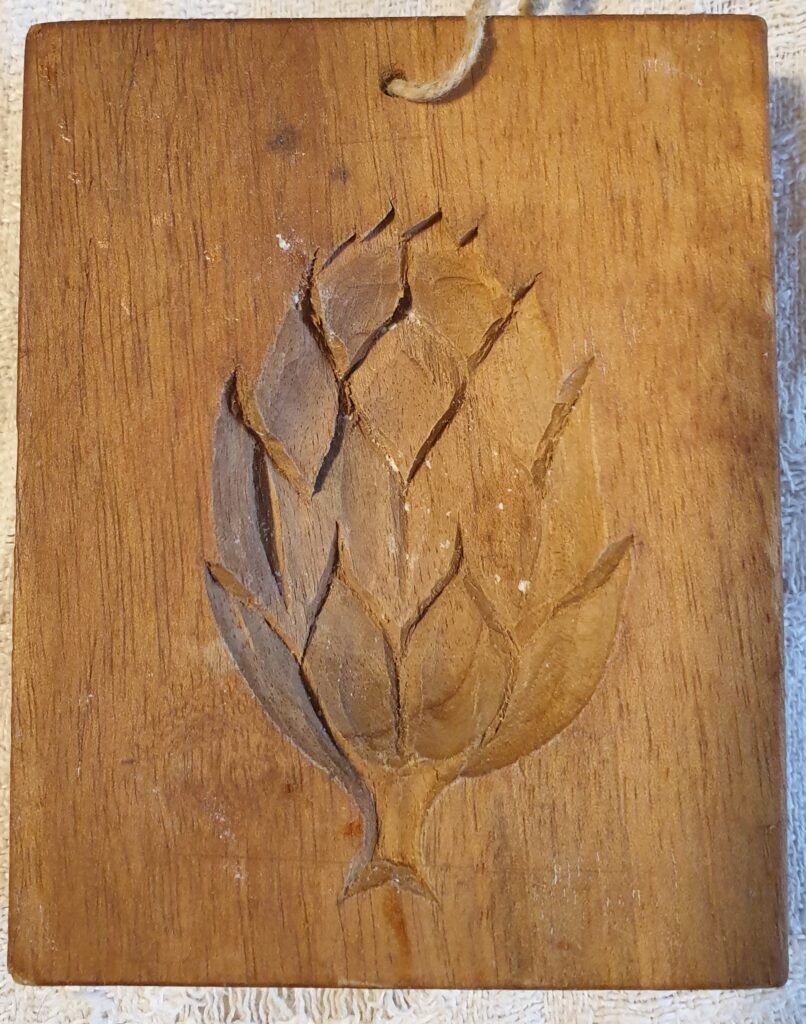
Forms for the “Festoni of Purim”, traditional and unique sweets from Ferrara’s Jewish heritage. Made by a local cabinetmaker after the war (1945-1946), they are now preserved in the Roberta Anau Collection in Turin.
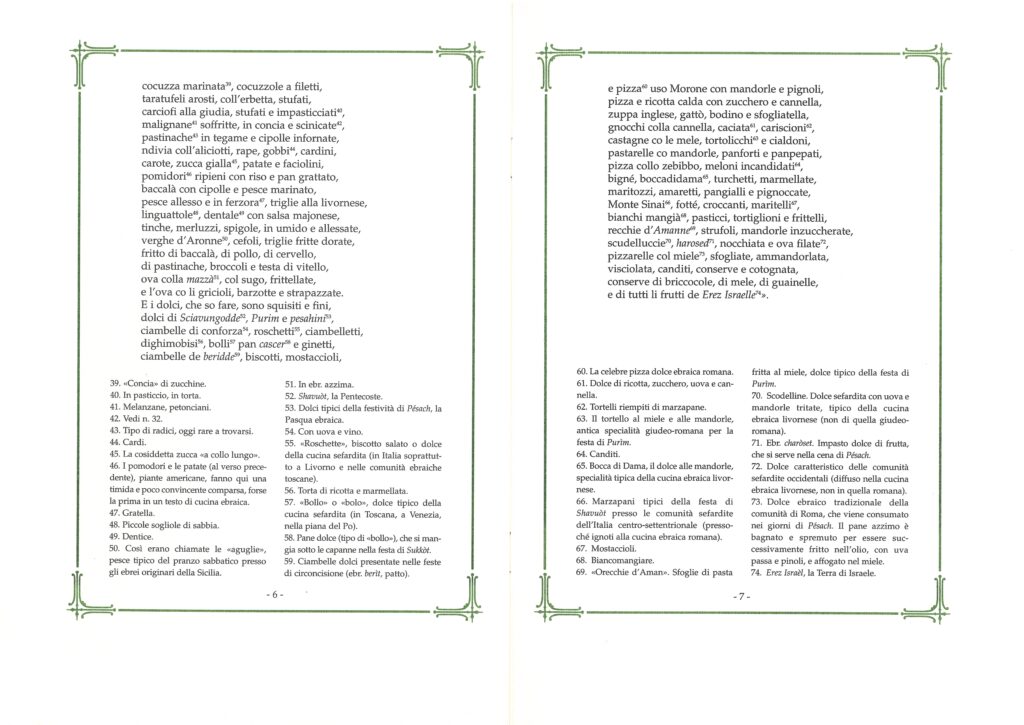
“La Sparsciandata”, anonymous poem in Judeo-Roman dialect dedicated to Jewish cuisine, connected to Purim. Early 20th century, Rimmonim edition (2005). Ferrara, Museo Nazionale dell’Ebraismo Italiano e della Shoah.
Crescenzo Del Monte (Roma, 1868-1935), “La cena de Purimme”, from Sonetti giudaico-romaneschi in Israel, Florence 1927, ed. Florence: Giuntina, 2007 Printed book, 19.6 × 14 cm. Rome, Biblioteca del Centro di Cultura Ebraica
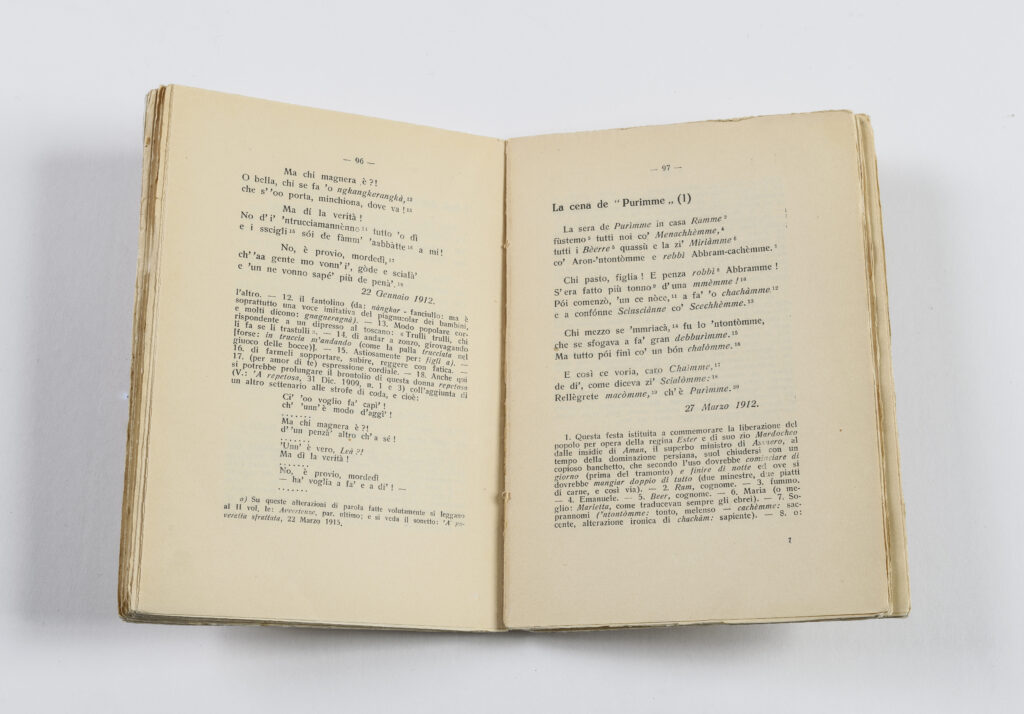
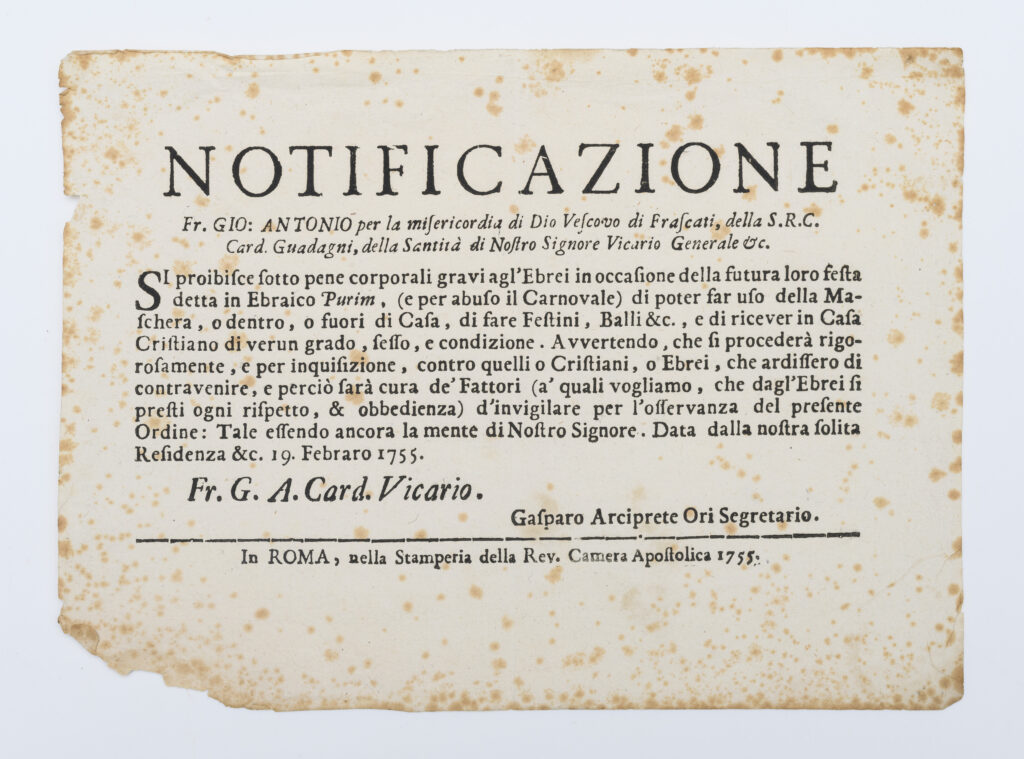
Notification Containing the Prohibition of Wearing Masks and Receiving Christians on Purim Rome: Printery of the Reverend Apostolic Chamber, 1755. One printed sheet, 27 × 19.5 cmJewish Museum of Rome, inv. 2401. Gift of Clotilde Piperno’s family (2014).