Do you want to learn the recipe for “Festoni of Purim” too? Watch the video with Roberta Anau and Silvia Pesaro!
Cabinetmaker from Ferrara
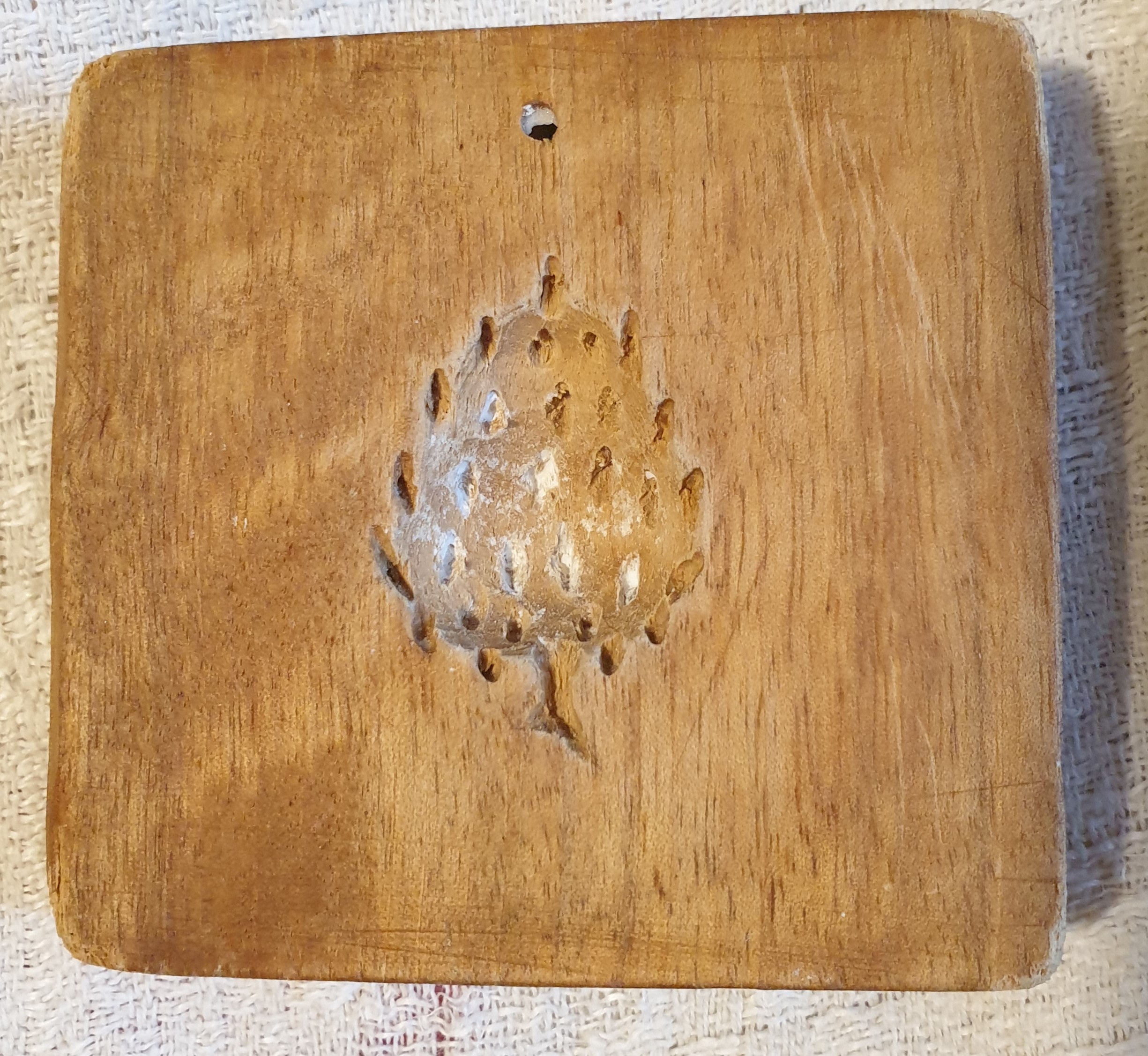
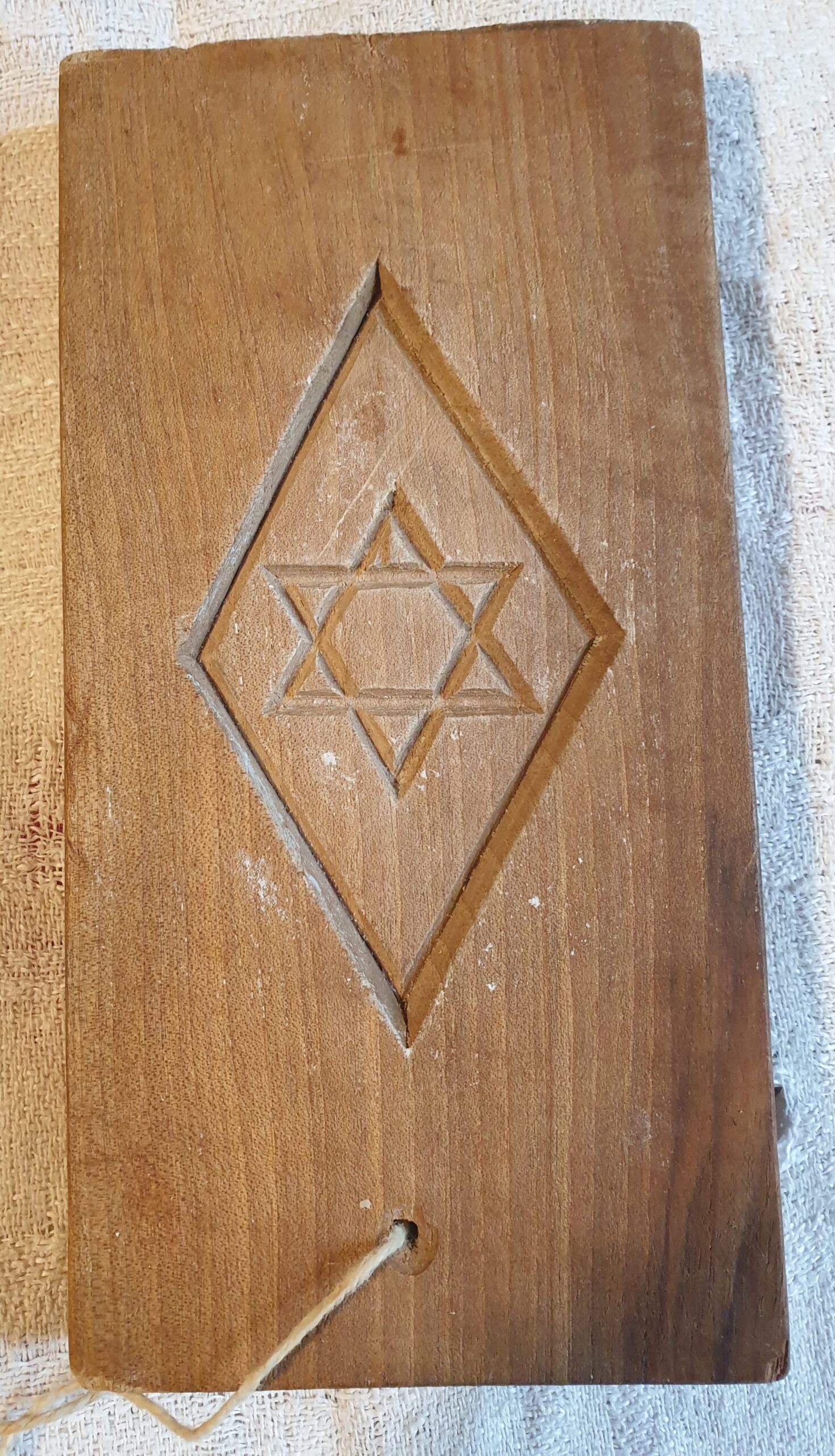
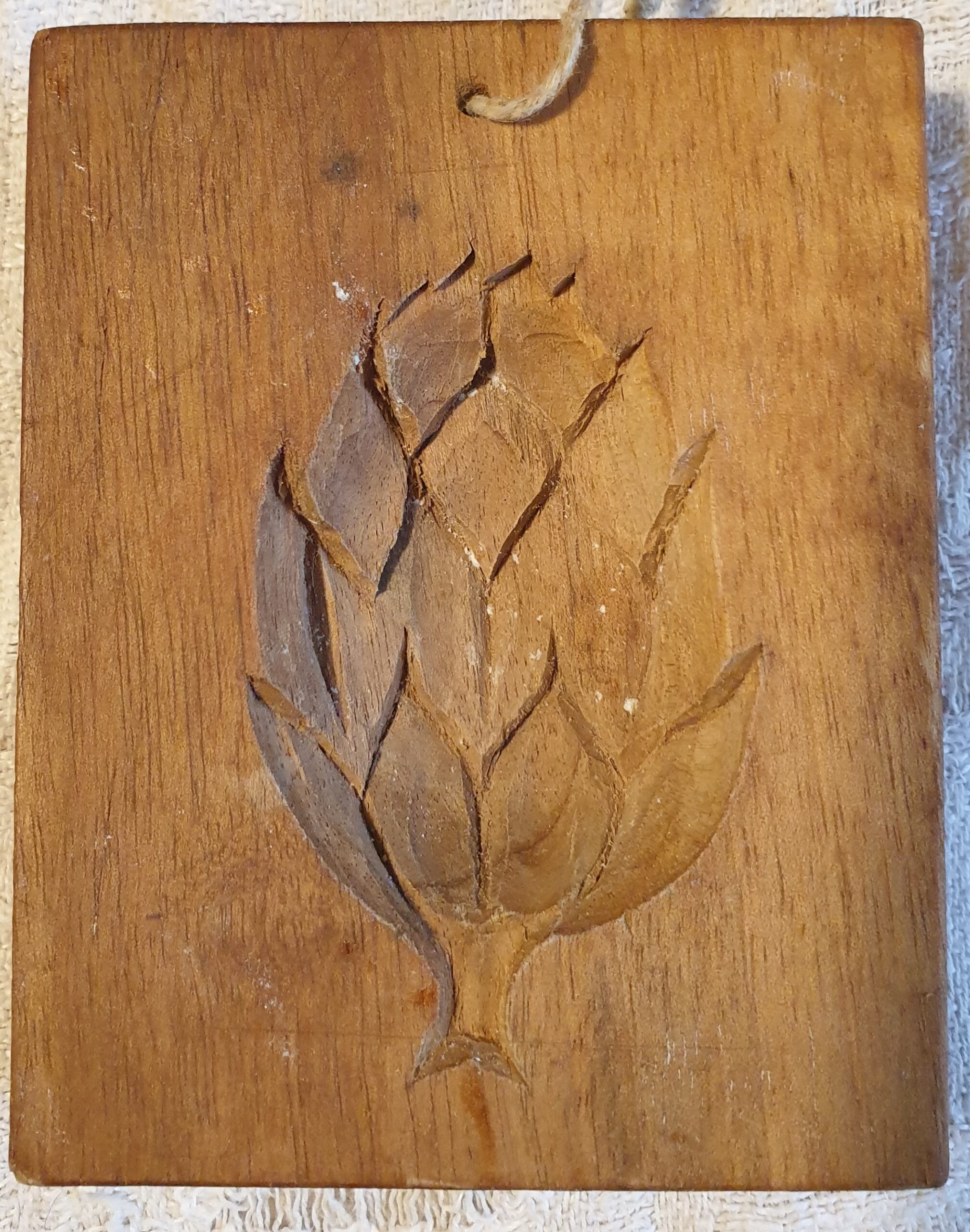
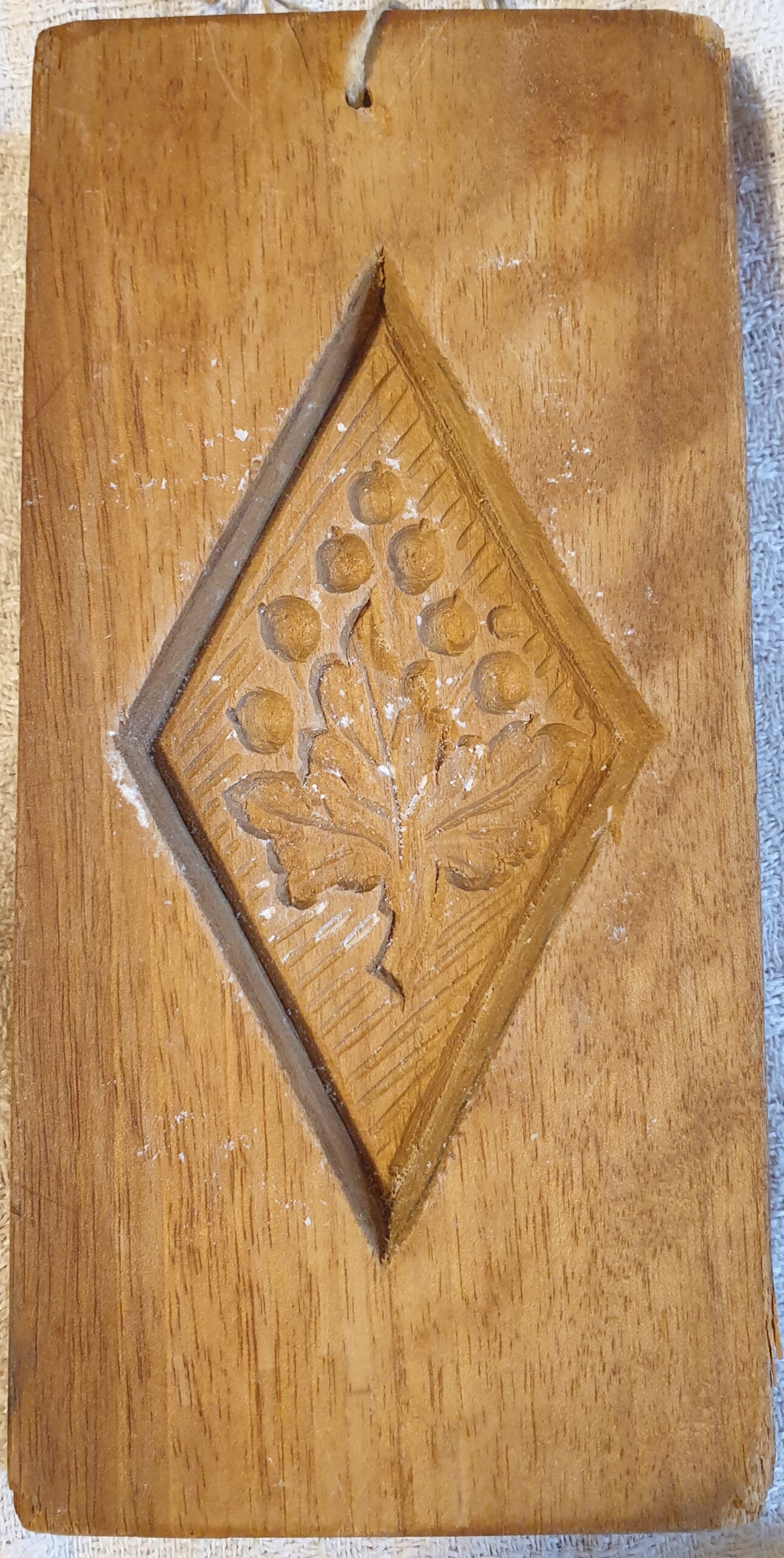
Forms for the “Festoni of Purim”
1945–46 Wood, 7.5 × 9.5 cm, 7 × 7.4 cm, 17.5 × 9 cm
Turin, Roberta Anau Collection
In the postwar period, when the surviving Jews returned to Ferrara from makeshift shelters (the Anau family was among them), the women of the ADEI Ferrara chapter (Associazione Donne Ebree d’Italia) decided to re store an old local tradition related to Purim and had these cake molds made in the shapes of a Star of David, an artichoke, and a strawberry. The origins of these cookies, called Festoni (Garlands), is steeped in mystery. There is no record of any other community having them in their Purim tradition. They may be the result of the Ashkenazi and Sephardic cultures blending in Ferrara, a city that welcomed the Jews from Central and Eastern Europe fleeing the po groms during the plague of 1300 and, after 1492, Sephardic refugees from Spain, who were welcomed at the court of the Este family. Almonds are quite a universal ingredient in Jewish cuisine. The recipe requires to mix pure powdered sugar with Tragacanth gum coming from Greece and the Middle East, and dried chips taken from some leguminous plants of the Astragalus genus that are immersed in water for 24 hours, until they become a viscous mucilage. A few green mint drops or orange blossom water are added to the dough, then it is rolled with a very small rolling pin and the first layer is placed on the form. The hollow cavity is then filled with a filling made of ground almonds with added sugar and egg white, and the cookie is finally closed with a second layer of dough. Once the dough excess has been cut off, the cookie is placed onto a napkin to dry.
RA